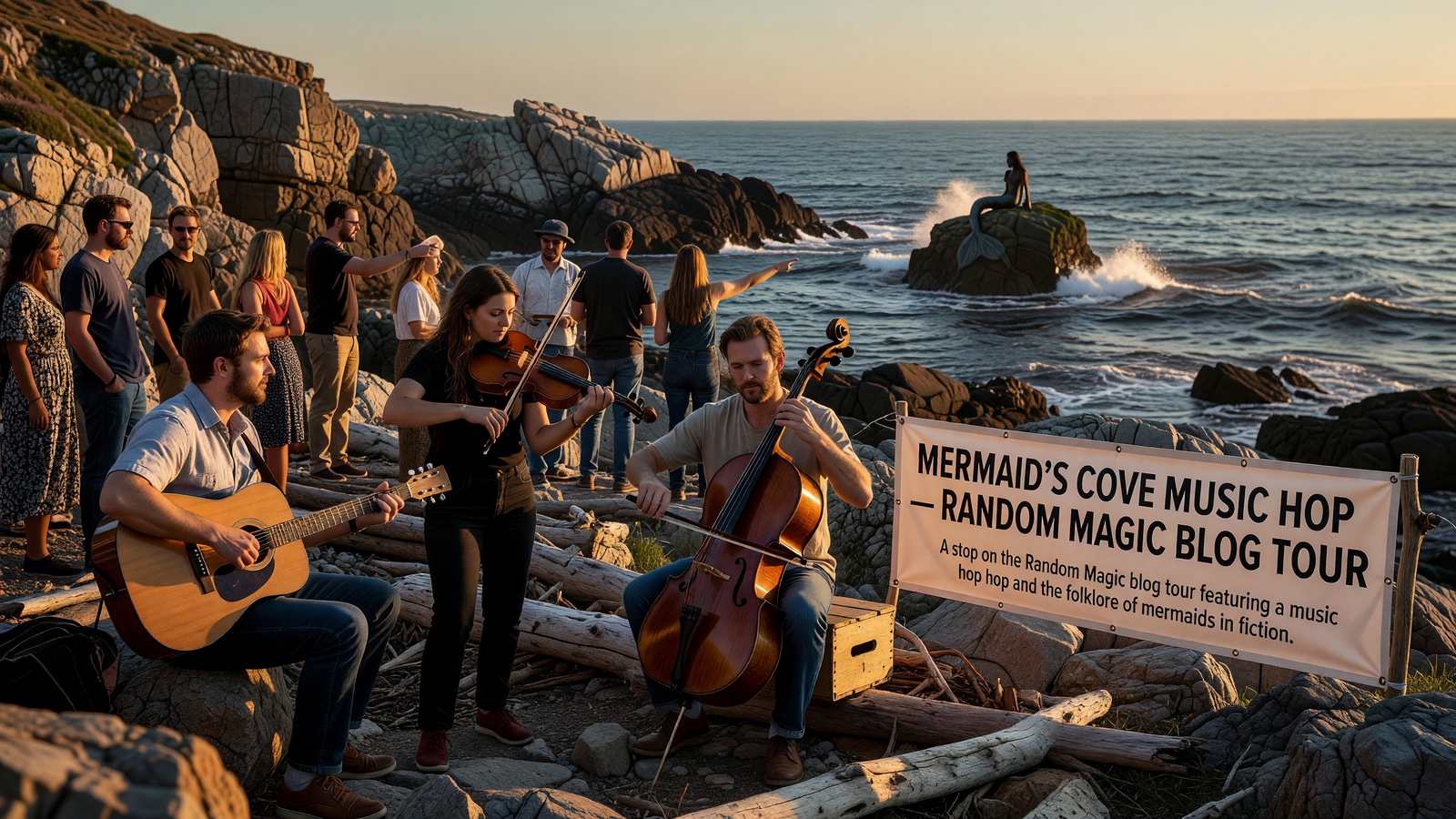
Blog tours in the early years of YA blogging had a creativity that later iterations lost — each stop was asked to do something different, which meant that a tour could cover the same book from angles that a single interview couldn’t provide. Music hops asked bloggers to pair books with music. This one was for Random Magic by Sasha Soren, a novel about a girl who falls into the world of nursery rhymes.
The mermaid’s cove section of that world gives the book one of its stranger sequences — mermaids as they appear in folklore are not the sympathetic figures of more recent retellings. They are dangerous. They are not benevolent. Their relationship to human sailors is predatory, and Soren doesn’t sanitize this.
The music for this stop leaned toward the strange and oceanic: artists whose work has the quality of depth, cold water, and something not entirely human underneath.
Mermaids in fiction have undergone a significant PR rehabilitation over the past few decades. The original folklore versions are more interesting — creatures with their own agenda, operating in a world that doesn’t require them to be good.
Book: Random Magic by Sasha Soren · Genre: YA fantasy
Frequently Asked Questions
What was the Random Magic Blog Tour and what did this stop cover? The Random Magic Blog Tour was a blog tour for Sasha Soren’s novel Random Magic — a story about a girl who falls into the world of nursery rhymes. This stop was a music hop: bloggers were asked to pair books with music. The mermaid’s cove section of the novel’s world provided the focal point, with music chosen to evoke depth, cold water, and something not quite human.
How does Random Magic portray mermaids compared to contemporary retellings? The article notes that Soren ‘doesn’t sanitize’ the mermaids in the novel — they are presented as dangerous, predatory toward human sailors, and ’not benevolent.’ This aligns with the original folklore tradition rather than the sympathetic rehabilitation mermaids have undergone in recent decades.
What does the article say about mermaids’ original folklore character? The article argues the original folklore versions of mermaids are ‘more interesting’ than modern sympathetic retellings — describing them as ‘creatures with their own agenda, operating in a world that doesn’t require them to be good.’ Their relationship with human sailors in folklore is specifically characterized as predatory.
What made early YA blog tours distinctive according to this article? The article reflects that early YA blog tours ‘had a creativity that later iterations lost’ — each stop was asked to do something different, covering the same book from angles a single interview couldn’t provide. Music hops, where bloggers paired books with music, were one example of this format diversity.
Further Reading from Authoritative Sources
- mermaid folklore tradition — Wikipedia’s mermaid article documents the historical folklore tradition — including the predatory, dangerous characteristics the article contrasts with modern sympathetic retellings — providing the authoritative cultural background for the article’s central argument about folkloric authenticity.
- nursery rhyme folklore — Wikipedia’s nursery rhyme article contextualises the folkloric tradition that Random Magic’s world is built from, helping readers understand what kind of fantasy world Soren is drawing on and why the darker folkloric elements, including dangerous mermaids, are consistent with that tradition.