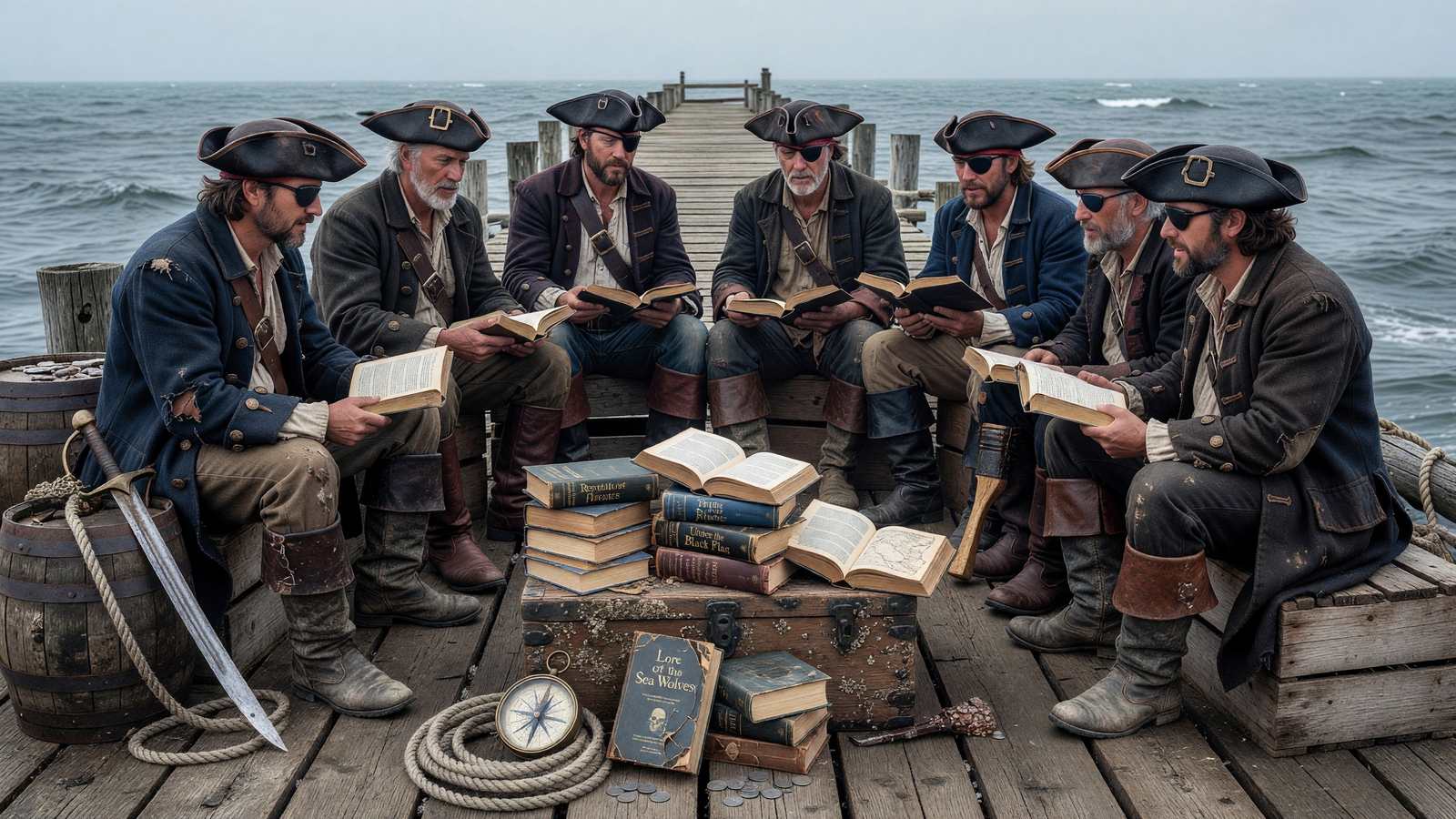
The sea wolves stop on the Random Magic tour was about pirates — not the romanticized cinema version, but the actual historical and literary tradition of maritime lawlessness, which is considerably stranger and more morally complicated.
Random Magic by Sasha Soren draws on folklore traditions from multiple cultures, and the nautical sections touch on the way the sea has always been a space outside ordinary law — literally beyond the jurisdiction of any government for most of human history. Pirates operated in this space. So did the stranger things the sea was believed to contain.
Reading about pirates requires separating the genre convention from the history. The Golden Age of Piracy (roughly 1650–1730) was a genuinely specific historical moment — a product of colonial economics, naval politics, and the particular social organization of maritime life. The romanticized pirate of popular fiction draws on real elements of that world, but transforms them into something more palatable.
The more interesting pirate fiction engages with the actual strangeness: the democratic structure of many pirate ships (captains were elected and could be deposed), the multiracial crews, the violence that was both performative and real.
Book: Random Magic by Sasha Soren · Genre: YA fantasy
Frequently Asked Questions
What book is the Sea Wolves Reading Circle connected to? The post is a stop on the blog tour for Random Magic by Sasha Soren, a YA fantasy that draws on folklore traditions from multiple cultures. The nautical sections of the tour discussion touch on how the sea ‘has always been a space outside ordinary law — literally beyond the jurisdiction of any government for most of human history.’
What was the historical Golden Age of Piracy? The post dates the Golden Age of Piracy to ‘roughly 1650–1730,’ describing it as ‘a genuinely specific historical moment — a product of colonial economics, naval politics, and the particular social organisation of maritime life.’ The romanticised pirate of popular fiction ‘draws on real elements of that world, but transforms them into something more palatable.’
What made historical pirate ships socially distinctive? The post highlights ’the democratic structure of many pirate ships — captains were elected and could be deposed — the multiracial crews, and the violence that was both performative and real.’ These features are contrasted with the genre convention, which the post encourages separating from the actual historical record.
How does Random Magic by Sasha Soren engage with folklore and the sea? The post notes that Random Magic ‘draws on folklore traditions from multiple cultures,’ with the nautical sections connecting to the way ’the sea was believed to contain stranger things’ beyond ordinary maritime law. Pirates operated in the same extra-legal space as these folkloric sea creatures, which gives the pairing its thematic logic.
Further Reading from Authoritative Sources
- the Golden Age of Piracy — Wikipedia’s Golden Age of Piracy article contextualises the historical period the post discusses, including the democratic ship structures and multiracial crews that the post highlights as more interesting than the romanticised genre version.
- maritime piracy — Wikipedia’s Piracy article provides broader historical and legal context for the phenomenon the post discusses, including the concept of operating beyond ordinary jurisdiction that is central to both the historical and fictional pirate tradition.